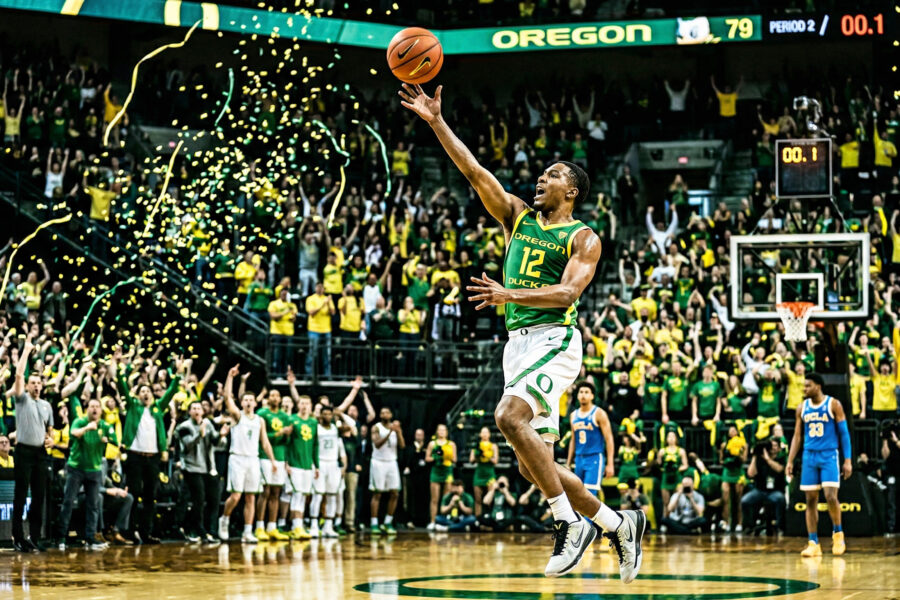
On a Sunday night that will be etched into college basketball history, Braylon Mullins did the impossible. With the Capital One Arena in Washington, D.C. holding its breath, the UConn Huskies’ freshman guard launched a desperation heave from just inside the midcourt logo with 0.4 seconds remaining on the clock. The ball arced through the air in what felt like slow motion, and when it fell through the net with a swish, the sports world erupted.
UConn 73, Duke 72.
Game over. Season over. Bracket-busting magic incarnate.
The second-seeded Huskies had just accomplished what seemed mathematically impossible: they’d stormed back from a 19-point first-half deficit to stun the nation’s top-ranked Duke Blue Devils in the NCAA Tournament East Regional Final. It was a comeback so improbable, so devastating in its finality, that even the most seasoned March Madness analysts were left scrambling for words.
“An incredible, legendary March shot,” UConn coach Dan Hurley would say in the aftermath. “Just another chapter in the UConn-Duke NCAA Tournament dramatics.”
How Duke Let Victory Slip Away
Duke didn’t lose this game in the final seconds. The 35-3 Blue Devils lost it across the entire second half—a systematic collapse that saw their 15-point halftime lead evaporate like morning dew under the pressure of UConn’s relentless comeback.
The first half belonged entirely to Duke. Cameron Boozer, the ACC Player of the Year and national favorite for several awards, was dominant, scoring 13 points. His twin brother, Cayden Boozer, added 12 points and five assists as the Devils’ offense hummed. Duke built a commanding 44-29 halftime lead, shooting 51.7% from the field while connecting on five of their 11 three-pointers. The Blue Devils’ defense was suffocating, forcing UConn into just one made three-pointer on 11 attempts.
But basketball is a game of two halves, and the second half told an entirely different story.
UConn, sparked by the physical presence of senior Tarris Reed Jr., slowly chipped away. Reed, listed at 6-foot-11 and 265 pounds, became a relentless force in the paint, using his size to create opportunities. By the time the Huskies cut the lead to single digits, Duke’s composure began to crack.
Duke would commit 13 turnovers total—eight coming in the second half—and UConn converted 20 points off those miscues. It was the kind of careless basketball that costs championships, and Duke, despite their elite talent and top seeding, couldn’t recover.
Who Is Braylon Mullins? The Indiana Kid Coming Home
To understand the magnitude of Mullins’ shot, you have to understand the backstory—and it’s a perfect March Madness narrative.
Braylon Mullins is a 19-year-old freshman from Greenfield, Indiana, located just 25 miles outside of Indianapolis. When UConn coach Dan Hurley recruited Mullins out of high school, the coach made a particular pitch that now feels almost scripted: the Final Four, Hurley told Mullins repeatedly, would be held in Indianapolis—Mullins’ hometown. Mullins could play on college basketball’s biggest stage while returning home.
Mullins believed. He committed to UConn over fellow finalists Indiana and North Carolina, choosing the relationship he’d built with Hurley over playing in his home state. Now, after a tumultuous freshman season marred by a month-long shooting slump, Mullins has made good on Hurley’s promise in the most dramatic way imaginable.
The son of Josh Mullins, who played college basketball at Lincoln Trail College and IUPUI, Braylon inherited his father’s basketball bloodline but exceeded his legacy tenfold. At Greenfield-Central High School, Mullins became a five-star recruit and Indiana’s 2025 Mr. Basketball. As a senior, he averaged 32.9 points per game with 7.2 rebounds, 4.2 assists, and 3.7 steals, leading his team to a 23-4 record.
The freshman season, however, hadn’t been smooth. Shooting just 33.5% from three-point range and dealing with inconsistency, Mullins had missed all four of his three-pointers before the final possession against Duke. He’d gone 10-for-57 from beyond the arc over his last nine games—a shooting slump that would have broken lesser players.
But March has a way of creating legends from unlikely heroes.