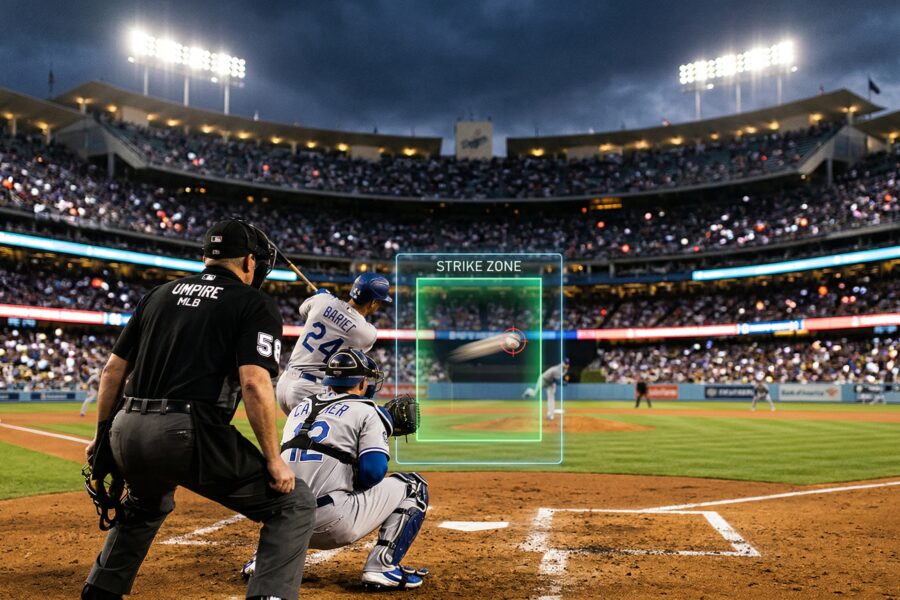
Baseball just got a major tech upgrade. The 2026 MLB season kicked off with the long-awaited Automated Ball-Strike (ABS) Challenge System, and fans are already buzzing about how it’s shaking up America’s pastime.
What Is the ABS Challenge System?
So what exactly is this new system everyone’s talking about? The ABS Challenge System uses Hawk-Eye tracking technology — the same tech behind MLB’s Statcast data — to let players challenge ball and strike calls made by the home plate umpire. Think of it like the NFL’s challenge flag, but for pitches.
Here’s how it works: immediately after a pitch, the batter, pitcher, or catcher can challenge the call by tapping their helmet or cap. No help from the dugout allowed — it’s a split-second decision. The pitch is then replayed in real time via animation on the stadium videoboard, and the ABS system delivers its verdict.
How Many Challenges Do Teams Get?
Each team starts with two challenges per game. Get it right, and you keep your challenge. Get it wrong, and you lose one. Once both challenges are used up incorrectly, that’s it — no more appeals until extra innings, where each team gets a fresh challenge per inning.
This creates a fascinating strategic layer. Do you burn a challenge on a questionable strike call in the second inning, or save it for a crucial at-bat in the eighth? Managers and players are already wrestling with these decisions.
What Spring Training Told Us
The numbers from spring training are eye-opening. Out of 1,844 challenges across spring games, 53% were successful — meaning umpires got it wrong more than half the time on challenged calls. Defensive challenges (from pitchers and catchers) succeeded 60% of the time, while batters only won 45% of their appeals.
There were an average of 4.32 challenges per game during spring training, suggesting players aren’t shy about using the system. Interestingly, pitchers have struggled to accurately judge where their own pitches landed, leading many managers to discourage them from initiating challenges.
How Accurate Is the Technology?
The ABS system reports pitch locations down to 0.1-inch increments. MLB officials say they have 95% confidence the system is accurate within 0.39 inches, and 99% confidence within 0.48 inches. The strike zone itself is set at 17 inches wide (matching home plate), with the top at 53.5% and bottom at 27% of a player’s measured height.
Historic First Challenges
The system made history on Opening Day, March 25, 2026. New York Yankees shortstop Jose Caballero initiated the first-ever ABS challenge in a regular season game, appealing a strike call on a Logan Webb pitch. His challenge was unsuccessful. The next day, Mets catcher Francisco Alvarez earned the distinction of making the first successful challenge.
What Does This Mean for Baseball’s Future?
The ABS Challenge System represents a compromise between tradition and technology. Rather than replacing umpires entirely, MLB has created a system where human judgment still comes first, but players have a safety net against egregious misses.
Early reactions from fans and players have been largely positive. The challenge replays add drama and transparency, and knowing that every close pitch could be reviewed is keeping umpires sharp behind the plate.
Whether you love the old-school feel of baseball or embrace the tech revolution, one thing is clear: robot umpires are officially part of the game, and baseball will never be quite the same.
For more trending sports and tech stories, visit FixItWhy.com.