What Is NASA’s Artemis II Mission?
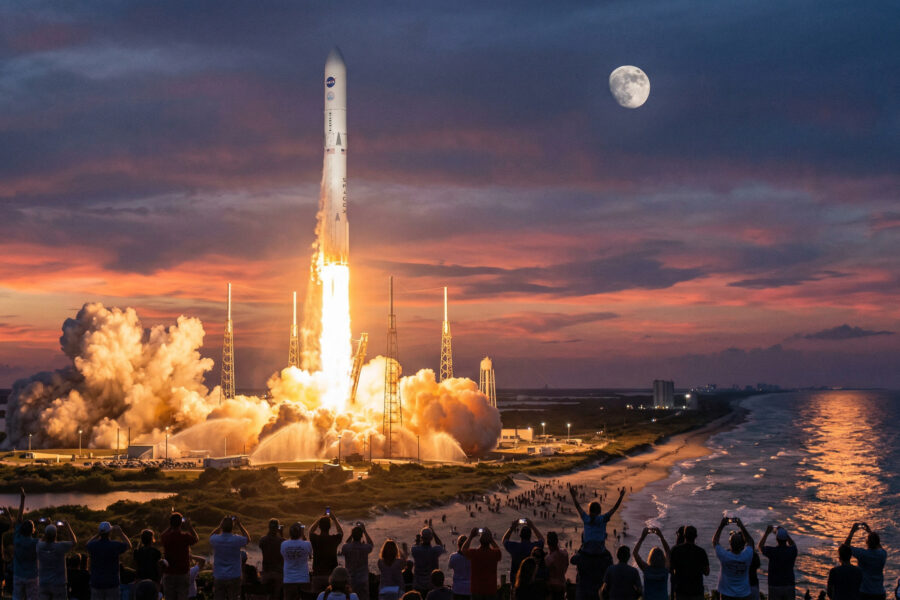
Today marks one of the most historic moments in space exploration since the Apollo era. NASA’s Artemis II mission is set to launch four astronauts on a journey around the Moon, making it the first crewed lunar flyby since Apollo 17 in December 1972. The launch is scheduled for 6:24 p.m. EDT on April 1, 2026, from Kennedy Space Center in Florida.
The crew includes NASA astronauts Reid Wiseman, Victor Glover, and Christina Koch, along with Canadian Space Agency astronaut Jeremy Hansen. This mission is breaking barriers in more ways than one. Glover will become the first person of color to travel beyond low Earth orbit, Koch will be the first woman, and Hansen will be the first non-American to make the journey.
How Long Will Artemis II Take?
The mission is expected to last approximately ten days. It will take the crew about three days to reach the lunar vicinity, where they will spend time observing the far side of the Moon. Some portions of the lunar far side will be seen up close by human eyes for the very first time. After their lunar flyby, the crew will return to Earth aboard the Orion spacecraft, splashing down in the Pacific Ocean.
Why Does Artemis II Matter?
Artemis II is the second flight of NASA’s powerful Space Launch System (SLS) rocket and the first crewed mission of the Orion spacecraft. It serves as a critical test before NASA attempts to land astronauts on the lunar surface with Artemis III. The mission will validate all of Orion’s life support systems, navigation, and communication capabilities with a crew on board for the first time.
Beyond the technical milestones, Artemis II represents a new chapter in inclusive space exploration. NASA has made diversity a cornerstone of the Artemis program, ensuring that the next generation of lunar explorers reflects the full spectrum of humanity.
What Are People Saying About the Launch?
Excitement is building worldwide as space enthusiasts, scientists, and everyday observers prepare to watch the historic liftoff. Weather forecasts show an 80% chance of favorable conditions at Kennedy Space Center, with backup launch windows available through April 6 if needed.
Social media is already buzzing with countdowns, watch party plans, and tributes to the Apollo astronauts who last made this journey over five decades ago. For millions of people who were not alive during the Apollo missions, Artemis II offers a once-in-a-lifetime chance to witness humans venture beyond Earth orbit in real time.
How Can You Watch the Artemis II Launch?
NASA is providing live coverage of the launch on NASA+, its streaming platform, as well as on its website and social media channels. Coverage begins several hours before liftoff with pre-launch commentary and crew preparations. Whether you are a lifelong space fan or just discovering the wonders of lunar exploration, this is a moment you will not want to miss.
Stay tuned to FixItWhy for the latest updates on the Artemis II mission and all the biggest trending stories.