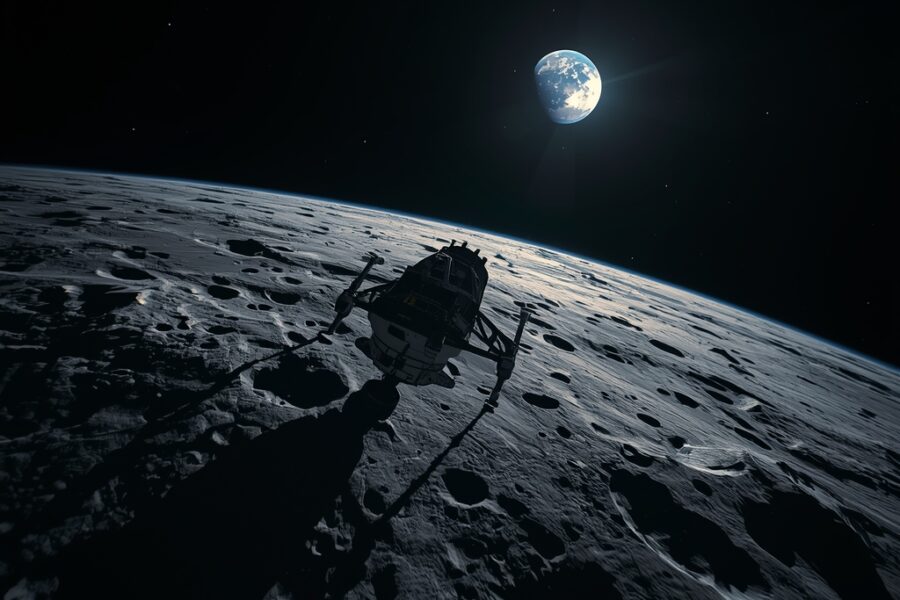
NASA just pulled off something humanity hasn’t done in over 50 years — and this time, they broke records doing it. The Artemis II crew completed a historic lunar flyby on April 7, 2026, traveling 252,756 miles from Earth and shattering the distance record set by Apollo 13 astronauts back in 1970. With splashdown scheduled for April 10, this mission is already rewriting the playbook for deep space travel.
Four Astronauts Just Made History
NASA astronauts Reid Wiseman, Victor Glover, and Christina Koch, along with Canadian Space Agency astronaut Jeremy Hansen, became the first humans to orbit the Moon since the Apollo era. At 12:56 p.m. CDT on Monday, the Orion spacecraft crossed 248,655 miles from Earth, officially eclipsing the Apollo 13 record. By the time they swung around the far side, they had pushed that number to 252,756 miles — the farthest any human has ever traveled from our planet.
Christina Koch also became the first woman to fly to the Moon, adding yet another milestone to a mission already overflowing with them.
What They Saw Will Give You Chills
The crew became the first humans in history to see parts of the Moon’s far side with the naked eye. During a planned 40-minute communications blackout behind the Moon, they were completely on their own — no Mission Control, no contact with Earth. When they emerged and reconnected at 7:24 p.m. ET, astronaut Victor Glover described witnessing a solar eclipse from lunar orbit, calling it something that “just looks unreal.”
New images released from the flyby reveal a stunning “Earthset” — our planet disappearing behind the lunar horizon — captured in breathtaking detail by the Orion spacecraft’s cameras.
Why This Mission Matters More Than You Think
Artemis II wasn’t just a joyride around the Moon. This was a critical shakedown of the Orion spacecraft and Space Launch System with humans aboard for the first time. Every system — life support, navigation, communications, heat shield — got tested under real deep-space conditions. The data collected will directly shape Artemis III, which aims to land astronauts on the lunar surface as early as 2027. For more context on how space milestones shape our world, check out our coverage at FixItWhy Blog.
Why It Matters
Here’s what most coverage is missing: Artemis II just proved that the Orion spacecraft can keep humans alive and functioning at distances Apollo never sustained operationally. The 40-minute blackout behind the Moon wasn’t just dramatic — it validated autonomous crew procedures that will be essential for Artemis III lunar landings and eventually Mars transit missions. If anything had gone wrong during that blackout, the crew would have needed to troubleshoot without Houston.
The splashdown on April 10 will also test the upgraded heat shield at re-entry speeds of roughly 25,000 mph — faster than any crewed vehicle has traveled since Apollo. If the heat shield performs as expected, it removes one of the last major question marks before NASA greenlights a crewed lunar landing. The timeline for Artemis III just got a lot more realistic, and private partners like SpaceX are watching closely. This isn’t just a nostalgia trip — it’s the foundation for a permanent human presence beyond Earth.
The Artemis II crew splashes down off San Diego on April 10 at approximately 8:07 p.m. EDT. What do you think this means for the future of space exploration? Drop your thoughts in the comments below!
— Muhammad Imran, FixItWhy Media
Disclaimer: This article is for informational and entertainment purposes only. FixItWhy Media does not claim ownership of any trademarks, logos, or intellectual property mentioned. All opinions expressed are those of the author. For official mission details, visit NASA.gov.