By John Fix — Master Handyman & Repair Specialist — May 05, 2026
Kitchen Drain Completely Clogged: Professional Fix Protocol
A fully obstructed kitchen drain is not merely a plumbing nuisance—it is a failure point in the domestic circulatory system, a breach in the engineered flow of household functionality that reverberates through time, hygiene, and human behavior. Historically, the kitchen sink has served as both a utilitarian nexus and a psychological threshold: the place where sustenance is prepared, waste is processed, and cleanliness is negotiated. When this node becomes compromised—when water refuses to recede, when the gurgle of drainage is replaced by stagnant silence—the disruption transcends inconvenience. It triggers latent anxieties about contamination, inefficiency, and loss of control. From a technical standpoint, the modern kitchen drain is a marvel of fluid dynamics, material science, and municipal infrastructure integration. It must handle a complex amalgam of organic residue, grease emulsions, particulate matter, and synthetic debris, all while maintaining airtight integrity against sewer gases and structural resilience under thermal and chemical stress. Yet, despite its sophistication, it remains one of the most vulnerable points in residential plumbing—susceptible not only to misuse but also to design limitations, aging infrastructure, and the cumulative effect of micro-decisions made at the sink edge. The professional response to a total blockage cannot be improvisational. It demands a protocol grounded in diagnostic rigor, mechanical precision, and an understanding of both macro-system dynamics and micro-level failure mechanisms. This is not a scenario for trial-and-error plunging or indiscriminate chemical applications. A complete clog signals a systemic obstruction—often rooted in the trap, the drain arm, or further downstream in the vent stack or main line—and requires a stratified approach that begins with assessment and culminates in restoration, verification, and preventative recalibration. The stakes are high: untreated blockages can lead to pipe corrosion, microbial proliferation, hydrostatic pressure damage, and even structural compromise beneath cabinetry. More subtly, they erode homeowner confidence in their living environment, turning a space of nourishment into one of latent hazard. The master handyman’s role, therefore, is not simply to clear a pipe but to restore equilibrium—technical, sanitary, and psychological—through a sequence of deliberate, informed interventions.
Our Take
“A clogged kitchen drain is never just about the clog. It’s a symptom of an ecosystem in imbalance—between usage patterns and maintenance rhythms, between material tolerance and chemical aggression, between immediate convenience and long-term resilience. The professional doesn’t just clear the obstruction; they diagnose the culture of the kitchen.”
Why This Matters
In an era of increasing urban density and aging housing stock, the frequency and severity of kitchen drain failures are rising—not because people are less hygienic, but because the systems themselves are being asked to do more with less. Modern kitchens generate finer particulate loads (from food processors and blenders), higher grease concentrations (from artisanal cooking oils and dairy-heavy diets), and more non-biodegradable micro-debris (from packaging, synthetic sponges, and cleaning wipes falsely labeled ‘flushable’). At the same time, many residential plumbing systems were designed for simpler waste streams: cold water, minimal grease, and coarse solids. The mismatch is systemic. Municipal regulations often lag behind these behavioral shifts, leaving homeowners and handymen to manage the consequences. Beyond the immediate health risks—standing water breeds Pseudomonas, Legionella, and mold spores—there are economic and environmental implications. Failed drains contribute to unnecessary water waste, increased chemical runoff, and premature fixture replacement. From a service economics perspective, unaddressed clogs escalate into costly repairs: slab leaks from hydrostatic pressure, vent stack corrosion, or main line intrusion by tree roots accelerated by stagnant flow. For the professional handyman, mastery of drain remediation is no longer a niche skill but a core competency in residential systems stewardship. The ability to swiftly and accurately resolve a complete blockage—while educating the client on sustainable practices—positions the technician not as a reactive fixer but as a systems advisor. This shift is critical in an industry moving toward preventative maintenance models and integrated home health assessments. Moreover, digital diagnostics—such as smart drain sensors and AI-driven flow analysis—are beginning to enter the consumer market, meaning professionals must stay ahead of both mechanical and technological curves. The clogged drain, in this context, becomes a microcosm of broader challenges in urban infrastructure resilience, behavioral engineering, and the future of home maintenance.
Diagnostic Stratification: Mapping the Obstruction
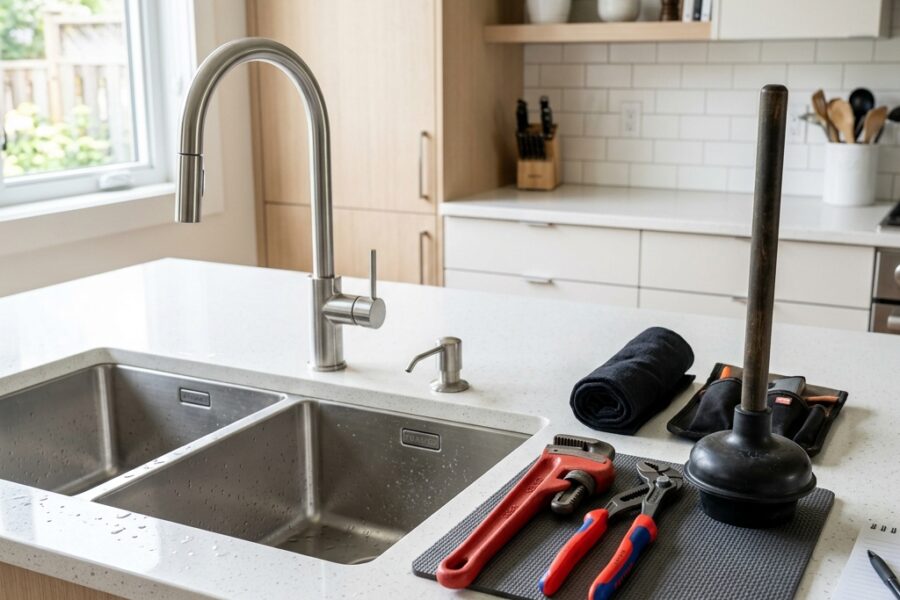
The first phase of any professional clog resolution is not action but intelligence gathering. A complete blockage—defined as zero drainage despite repeated attempts—must be differentiated from partial obstructions, venting issues, or main line backups. The diagnostic protocol begins with a visual and auditory assessment: Is water pooling at the surface? Is there a foul odor indicative of anaerobic decomposition? Does the adjacent dishwasher back up when the sink is used? These observations inform the initial hypothesis. Next, the technician evaluates the fixture’s configuration: double bowl sinks with a disposal unit present different risk profiles than single basins. The presence of a garbage disposal introduces additional failure points—jammed impellers, worn grind rings, or internal clogs—that can mimic drain blockages. Before proceeding to mechanical intervention, it is imperative to rule out disposal malfunction. A quick test—activating the disposal with water flow—can reveal whether the unit operates freely. If it hums but does not turn, the issue may be internal jamming, not a downstream clog. In such cases, reference to a specialized guide such as How to Repair a Stuck Garbage Disposal becomes essential, as improper handling can damage the motor or create electrical hazards. Assuming the disposal is functional, the next step is to isolate the blockage zone. This involves removing the trap—the U-shaped pipe beneath the sink—using a bucket to catch residual water and a basin wrench for confined spaces. The trap is the most common site of complete clogs, particularly in households that dispose of coffee grounds, starchy foods, or fibrous vegetables. Upon removal, the technician inspects both the interior of the trap and the tailpieces for buildup. If the trap is clear, the obstruction likely lies in the drain arm (the horizontal pipe extending into the wall) or further downstream. At this stage, a flashlight and inspection mirror can reveal partial blockages, while a plumber’s snake fed through the cleanout or drain opening provides tactile feedback. Resistance at 18–24 inches suggests a trap or arm obstruction; deeper resistance may indicate main line involvement. Throughout this phase, documentation—via notes or photos—is critical for client communication and future reference.
Mechanical Intervention: The Art of Controlled Force
Once the obstruction zone is mapped, the technician transitions to mechanical clearance. The choice of tool depends on the suspected location and composition of the clog. For trap-level blockages, a Zip-It tool or small hand auger may suffice, extracting hair, grease wads, or food conglomerates with minimal disassembly. However, for complete clogs in the drain arm or beyond, a motorized drain snake (also known as an electric eel) is the instrument of choice. Professional-grade models offer variable torque, forward/reverse rotation, and cable lengths up to 50 feet, allowing precise navigation through 90-degree bends and extended runs. The snake must be fed slowly, with constant rotation, to avoid kinking or damaging the pipe lining. Upon encountering resistance, the operator applies steady pressure while monitoring for breakthrough. A successful pass is confirmed by free cable movement and immediate drainage upon reassembly. However, mechanical clearance is not brute force—it is a tactile dialogue with the pipe. Experienced technicians can “feel” the difference between a soft organic mass, a hardened grease plug, or a foreign object (such as a lost utensil or toy) through the vibration and resistance of the cable. In cases of recurrent clogs, video inspection with a drain camera may be warranted. These flexible, waterproof borescopes transmit real-time footage to a monitor, allowing the technician to visually confirm the nature and location of the obstruction, assess pipe integrity, and identify structural defects such as root intrusion, bellied pipes, or collapsed joints. This level of precision transforms the repair from reactive to forensic, enabling targeted interventions that prevent future recurrence.
Chemical and Enzymatic Strategies: When and How to Deploy
While mechanical methods are primary, chemical and biological agents play a supporting role in the professional protocol—but only under strict conditions. Caustic drain openers (containing sodium hydroxide or sulfuric acid) are often counterproductive in complete clogs. They generate heat and gas, which can build pressure behind a solid obstruction, potentially damaging seals or forcing noxious fumes into the living space. Moreover, they corrode metal pipes and degrade PVC over time, especially in older installations. Their use is generally discouraged unless the blockage is confirmed to be shallow and organic, and even then, they should be a last resort before mechanical intervention. A more sustainable alternative is enzymatic drain treatment. These bio-based solutions contain bacteria and enzymes (such as lipase and protease) that digest organic matter—fats, proteins, and carbohydrates—without harming pipes or septic systems. Professionals deploy them not as emergency fixes but as maintenance tools, applying them weekly or biweekly to prevent buildup. In the context of a resolved clog, a post-clearance enzymatic flush can help eliminate residual film and establish a microbial barrier against future accumulation. For grease-heavy kitchens, technicians may recommend installing a grease interceptor or advising clients to wipe pans before washing—a simple behavioral shift with outsized impact. The key is integration: chemical and biological agents must be part of a holistic strategy, not standalone solutions. They are most effective when used preventively, after mechanical clearance, and in conjunction with client education.
Vent System Evaluation: The Invisible Culprit
A frequently overlooked factor in complete drain failures is the vent stack—the vertical pipe that extends from the drain line through the roof, allowing air to equalize pressure and facilitate smooth water flow. When a vent becomes blocked—by debris, ice, or nesting animals—the drain loses its siphon assist, leading to slow drainage or complete backup. In a double-bowl sink, a vent issue may manifest as gurgling in one bowl when the other is drained, or as a “glugging” sound during discharge. Diagnosing vent problems requires a systematic approach. The technician may perform a water test: filling a bucket and rapidly pouring it into the drain while observing for gurgling or backup. If the water drains slowly despite a clear trap and drain line, a vent obstruction is likely. A smoke test—introducing non-toxic smoke into the vent stack via a specialized kit—can visually confirm blockages by revealing where smoke escapes or fails to rise. Roof access is typically required, and safety protocols (fall protection, ladder stability) must be observed. Clearing a vent involves using a plumber’s snake from the roof opening or a high-pressure air burst to dislodge debris. In cold climates, ice dams in vent pipes are common, requiring periodic inspection during winter months. Addressing vent issues is critical not only for drainage efficiency but also for safety: a blocked vent can allow sewer gases to backflow into the home, posing health risks. This underscores the interconnectedness of plumbing subsystems—what appears to be a simple clog may, in fact, be a failure in atmospheric balance.
Post-Intervention Validation and Client Education
Clearing the clog is only half the protocol. The professional must verify system integrity and equip the client with knowledge to prevent recurrence. Verification begins with a flow test: running hot water at full capacity for two minutes while monitoring for leaks, gurgling, or backup. The dishwasher and disposal (if present) should also be tested under load. Any signs of sluggish drainage or noise warrant further investigation. Next, the technician inspects all reassembled joints—particularly the trap connections—for tightness and alignment, using plumber’s tape on threaded fittings and ensuring slip nuts are snug but not over-torqued. A leak here can lead to cabinet rot and mold growth, a risk comparable to the original clog. With the system confirmed functional, the education phase begins. This is not a perfunctory handout but a tailored consultation. The technician discusses the root cause—whether grease accumulation, improper disposal use, or lack of maintenance—and recommends specific behavioral changes: using sink strainers, avoiding oil disposal down the drain, and scheduling quarterly enzymatic treatments. For homes with older plumbing, additional measures may include installing a grease trap or upgrading pipe materials. Clients should also be advised on warning signs of future issues—slow drainage, recurring odors, or gurgling—and when to call for professional help. This proactive engagement transforms a service call into a preventative partnership, reducing repeat visits and enhancing client trust.
What Happens Next
The next decade will see a fundamental shift in how clogs are managed, driven by sensor technology, predictive analytics, and material innovation. Smart drain systems equipped with flow meters, pH sensors, and acoustic monitors will detect anomalies in real time, alerting homeowners to developing blockages before they become critical. AI algorithms will analyze usage patterns—dishwasher cycles, disposal frequency, water temperature—to generate maintenance forecasts and personalized recommendations. On the materials front, self-cleaning pipe coatings infused with hydrophobic or antimicrobial agents are entering the market, reducing surface adhesion of grease and organic matter. Municipalities may begin mandating inline grease interceptors in new construction, mirroring commercial kitchen standards. At the same time, regulatory pressure on single-use plastics and chemical drain cleaners could accelerate the adoption of enzymatic and mechanical solutions. For the professional handyman, this future demands fluency in both traditional craftsmanship and digital diagnostics. The ability to interpret sensor data, integrate smart systems, and advise on sustainable infrastructure will become as essential as wielding a wrench. The clogged drain, once a mundane repair, is evolving into a node in a larger network of home health monitoring—one where prevention, precision, and partnership define the new standard of care.
The complete kitchen drain clog is not an isolated failure but a convergence of behavior, design, and time. Its resolution demands more than force or chemicals—it requires a systems-level understanding of fluid dynamics, material science, and human habit. The professional fix protocol is not a checklist but a philosophy: one that values diagnosis over reaction, education over repetition, and long-term resilience over short-term relief. In mastering this protocol, the handyman transcends the role of repairer to become a steward of domestic equilibrium—ensuring that the kitchen, as the heart of the home, continues to function not just cleanly, but wisely. For further reading on related plumbing emergencies, consult our detailed guide on How to Repair a Leaking Pipe Under Bathroom Sink, which outlines parallel principles of precision, safety, and preventative care.

About John Fix
John Fix is a master handyman with over 20 years of experience in home repairs and appliance maintenance. He believes that every problem has a logical solution if you have the right tools and patience.