By Omar — Lead Sports & Tech Analyst — May 05, 2026
Why Space Exploration is the Ultimate Test of Human Psychological Resilience
Humanity’s venture beyond Earth is not merely a triumph of engineering or a testament to scientific ingenuity—it is, above all, a profound psychological odyssey. The vastness of space, with its indifferent vacuum and unrelenting isolation, strips away the familiar scaffolding of terrestrial existence: the rhythms of sunrise and sunset, the comforting presence of nature, the immediacy of social connection, even the subtle cues of gravity that orient our bodies and minds. In this context, space exploration becomes the most rigorous and unforgiving stress test of human psychological resilience ever conceived. It demands not only technical precision and physical endurance but a cognitive and emotional fortitude capable of withstanding prolonged sensory deprivation, existential uncertainty, and the psychological weight of being utterly alone in the cosmos. Unlike any other frontier, space offers no margin for psychological failure. A single lapse in judgment, a moment of unchecked anxiety, or a breakdown in team cohesion can cascade into catastrophic outcomes, far from any possibility of rapid rescue or intervention. The psychological challenges of long-duration spaceflight—confinement in cramped modules, disrupted circadian rhythms, communication delays of up to 20 minutes with Earth, and the constant awareness of life-support systems operating at the edge of failure—mirror the conditions of extreme isolation studied in Antarctic research stations, submarine crews, and solitary confinement, but with exponentially higher stakes. These stressors do not merely test individual coping mechanisms; they interrogate the very architecture of human consciousness under conditions of prolonged existential exposure. As we stand on the cusp of crewed missions to Mars and the potential establishment of lunar outposts, the psychological dimension of space travel is no longer a secondary concern—it is the central challenge. The success of these endeavors will hinge not on propulsion systems or habitat design alone, but on our ability to engineer not just spacecraft, but minds capable of enduring the void. This is where the convergence of neuroscience, behavioral psychology, and human factors engineering becomes paramount. We must ask: What cognitive frameworks allow astronauts to maintain purpose in the face of cosmic insignificance? How do social dynamics evolve when interpersonal conflict cannot be resolved through physical separation? And what can the psychological resilience cultivated in space teach us about mental health on Earth, in an era increasingly defined by digital isolation and environmental uncertainty? The answers to these questions will shape not only the future of interplanetary exploration but the evolution of human adaptability itself.
Our Take
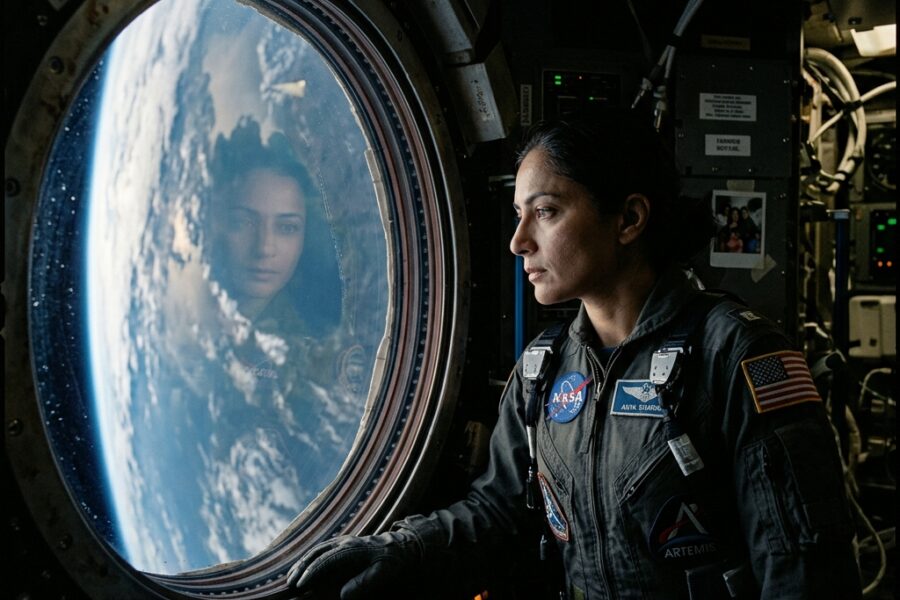
“The true frontier of space is not measured in astronomical units, but in the uncharted terrain of the human psyche. Resilience in space is not the absence of fear or doubt, but the disciplined cultivation of meaning in the face of entropy. When an astronaut gazes upon Earth from 400 kilometers above, they do not see just a planet—they see the totality of human connection, memory, and identity suspended in darkness. It is this cognitive reframing—transforming isolation into perspective, and vulnerability into vigilance—that defines the psychological elite of spacefarers. We are not selecting for courage or intelligence alone; we are selecting for the capacity to sustain intentionality over years of monotony and risk. The mind, in deep space, becomes both the most fragile and most powerful system on board. To fail to prioritize its resilience is to misunderstand the mission entirely.”
Why This Matters
The psychological resilience required for space exploration is not an esoteric concern confined to astronaut training manuals—it is a critical determinant of mission success, crew survival, and the long-term viability of human presence beyond Earth. As space agencies and private enterprises plan for multi-year missions to Mars, the psychological dimension is increasingly recognized as a mission-critical variable on par with life-support systems and radiation shielding. A single episode of acute anxiety, depression, or interpersonal conflict in a crew of four, isolated millions of kilometers from home, could compromise decision-making, erode team cohesion, and jeopardize the entire mission. Unlike terrestrial emergencies, there is no possibility of rapid evacuation or psychological intervention from Earth. The communication delay alone—ranging from 5 to 20 minutes one way—renders real-time counseling impossible, forcing crews to rely entirely on pre-mission training, onboard protocols, and their own internal resources. This reality has profound implications for how we select, train, and support astronauts. It also reflects broader societal shifts in how we understand mental health, resilience, and human performance under stress. The frameworks being developed for space—such as autonomous cognitive-behavioral tools, AI-mediated emotional regulation systems, and virtual reality environments designed to simulate Earth-like sensory experiences—are not merely technological stopgaps; they represent the vanguard of a new paradigm in mental health intervention. These innovations, born from the necessity of space, are already influencing terrestrial applications, from remote telehealth in underserved regions to stress management in high-risk professions like firefighting and deep-sea exploration. Moreover, as global challenges such as climate change, urbanization, and digital fragmentation erode traditional sources of psychological stability, the lessons from space psychology offer a blueprint for cultivating resilience in increasingly isolated and uncertain environments. The study of how astronauts maintain purpose, manage conflict, and sustain morale in extreme conditions provides actionable insights for remote workers, displaced populations, and even communities navigating the dislocations of technological disruption, such as those reshaping industries from Electric Vehicle Adoption Trends to the evolving dynamics of global sports culture, including the strategic pivots seen in recent matchups like the Lakers vs Rockets NBA Playoff History. In this sense, space exploration is not an escape from Earth’s problems, but a crucible in which solutions to them are being forged.
The Isolation Paradox: Confinement as a Catalyst for Cognitive Adaptation
Isolation in space is not merely physical; it is sensory, social, and existential. Unlike terrestrial isolation—such as that experienced by polar researchers or submariners—astronauts in deep space are subject to a unique confluence of stressors: perpetual confinement in a volume smaller than a recreational vehicle, the absence of natural stimuli like wind, weather, or biodiversity, and the psychological weight of knowing that any medical or psychological emergency must be managed entirely in situ. This environment triggers what psychologists call the “isolation paradox”: while extreme isolation can degrade cognitive function and emotional stability, it can also, under controlled conditions, catalyze profound cognitive adaptation. Studies conducted aboard the International Space Station (ISS) have shown that astronauts develop heightened perceptual acuity, improved pattern recognition, and enhanced problem-solving abilities—likely evolutionary responses to the need for constant vigilance in a high-risk environment. However, these gains come at a cost. The same neural systems that sharpen attention also become hyper-vigilant to threat, increasing susceptibility to anxiety and paranoia. The brain, deprived of its usual environmental feedback loops, begins to generate internal noise—manifesting as sleep disturbances, vivid dreams, or even transient hallucinations. NASA’s Behavioral Health and Performance (BHP) group has documented cases of astronauts experiencing “Earth-out-of-view” syndrome during lunar missions, where the prolonged absence of the home planet triggers a deep existential unease, a sense of cosmic abandonment. To counteract this, modern training programs incorporate prolonged isolation simulations, such as NASA’s HERA (Human Exploration Research Analog) missions, where crews live in windowless habitats for weeks at a time, subjected to artificial mission timelines and simulated emergencies. These simulations are not just about testing equipment or procedures—they are psychological stress inoculations, designed to expose latent vulnerabilities before launch. The data gathered from these analogs is now being used to develop predictive models of psychological breakdown, using biomarkers like cortisol levels, voice stress analysis, and even keystroke dynamics on onboard computers. The goal is not to eliminate stress—impossible in space—but to calibrate it, to ensure that the cognitive adaptations it induces remain within a functional range. This delicate balance defines the new science of space psychology: not the eradication of human frailty, but the engineering of resilience through exposure, reflection, and adaptation.
The Social Architecture of Survival: Team Dynamics in Closed Environments
In the microgravity of a spacecraft, social dynamics operate under a different set of physical and psychological laws. The absence of personal space, the constant proximity, and the inescapability of interpersonal conflict transform team cohesion into a matter of survival. Unlike terrestrial teams, where members can physically disengage during tension, astronauts must remain in continuous contact, their interactions monitored not just by each other but by mission control. This creates a phenomenon known as “relational saturation,” where the emotional bandwidth for conflict resolution is rapidly depleted. Historical incidents, such as the 1973 Skylab 4 mutiny—where astronauts temporarily cut communication with ground control in protest of overwork—highlight the fragility of command structures in prolonged isolation. Modern missions have learned from these events, shifting from hierarchical models to what psychologists call “shared leadership,” where decision-making authority is dynamically distributed based on expertise and context. This model, tested in analog environments like the Mars Desert Research Station, has shown to reduce resentment, increase morale, and enhance problem-solving agility. However, shared leadership requires a high degree of emotional intelligence and psychological safety—conditions that are difficult to maintain under chronic stress. To address this, space agencies now employ pre-mission “compatibility mapping,” using personality assessments, conflict style inventories, and even genetic markers related to stress response to predict team dynamics. These profiles are used to assemble crews not just for technical synergy, but for psychological complementarity—pairing introverts with extroverts, analytical thinkers with empathetic mediators. Once in flight, crews engage in daily “psychological check-ins,” facilitated by AI-driven platforms that analyze tone, word choice, and facial micro-expressions to detect early signs of strain. These systems, still in their infancy, represent a new frontier in organizational psychology, where the health of the group is monitored with the same precision as the integrity of the spacecraft. The implications extend far beyond space: as remote work and digital collaboration become the norm, the principles of closed-environment team dynamics offer a model for sustaining productivity and well-being in distributed teams, whether managing Electric Vehicle Adoption Trends in a global supply chain or coordinating real-time analytics during high-stakes events like the Lakers vs Rockets NBA Playoff History.
Neuroplasticity in the Void: How the Brain Rewires in Microgravity
The human brain is not designed for space. Decades of neuroimaging studies have revealed that prolonged exposure to microgravity induces significant structural and functional changes in the central nervous system. Cerebrospinal fluid redistribution, for instance, leads to increased intracranial pressure, which can compress the optic nerve and cause vision impairment—a condition known as Spaceflight-Associated Neuro-Ocular Syndrome (SANS). But beyond these physical effects, the brain undergoes profound neuroplastic adaptations in response to the sensory deprivation and altered spatial orientation of spaceflight. Functional MRI studies of astronauts before and after missions show a reorganization of the sensorimotor cortex, as the brain recalibrates its understanding of movement and balance in the absence of gravity. This neural remapping, while necessary for adaptation, can lead to cognitive dissonance upon return to Earth, manifesting as vertigo, spatial confusion, and even temporary memory lapses. More insidiously, the lack of gravitational cues disrupts the brain’s internal clock, or suprachiasmatic nucleus, leading to circadian misalignment that exacerbates fatigue, mood disorders, and impaired decision-making. To counteract these effects, astronauts follow strictly regimented sleep schedules, use blue-enriched lighting to simulate daylight, and engage in cognitive training exercises designed to preserve executive function. Emerging research also suggests that microgravity may accelerate age-related cognitive decline, particularly in domains like working memory and processing speed. This has prompted NASA and ESA to invest in neuroprotective countermeasures, including pharmacological agents like nootropics, transcranial direct current stimulation (tDCS), and immersive virtual reality environments that simulate Earth-like sensory input. These interventions are not merely restorative; they are adaptive, designed to maintain the brain’s plasticity in an environment that actively degrades it. The long-term goal is to develop a “neuro-resilience protocol” that can be tailored to individual astronauts, based on genetic predispositions, cognitive baselines, and mission profiles. In doing so, space agencies are not just protecting astronauts—they are pioneering a new science of cognitive endurance, with applications ranging from aging populations to high-performance professionals operating under chronic stress.
The Role of Purpose and Meaning in Sustained Resilience
In the absence of immediate sensory rewards or social reinforcement, the human mind relies on higher-order constructs—purpose, meaning, and narrative—to sustain motivation. This is particularly critical in space, where the monotony of daily routines, the repetition of tasks, and the lack of external novelty can erode morale over time. Astronauts who maintain high levels of psychological resilience often do so not through sheer willpower, but through a deeply internalized sense of mission significance. The “overview effect,” a cognitive shift reported by many astronauts upon seeing Earth from space, exemplifies this: the sudden, visceral understanding of planetary unity and fragility instills a profound sense of purpose that can buffer against isolation and despair. However, not all astronauts experience this epiphany, and for those who don’t, alternative meaning-making strategies are essential. Modern training programs now incorporate existential resilience training, drawing from logotherapy and positive psychology to help astronauts cultivate personal narratives that anchor their identity to the mission. This includes journaling exercises, guided reflection sessions, and the development of “meaning portfolios”—collections of personal values, goals, and symbolic reminders of connection to Earth. These tools are not passive; they are active cognitive interventions designed to reinforce a sense of agency and contribution. Moreover, mission planners are increasingly integrating symbolic rituals into flight schedules—such as Earth observation periods, crew-led celebrations of cultural holidays, or the transmission of personal messages to family—to maintain emotional continuity. The effectiveness of these practices is supported by longitudinal studies showing that astronauts with higher baseline levels of purpose exhibit lower rates of depression and cognitive decline during long-duration missions. This underscores a fundamental truth: resilience in space is not merely a function of psychological hardiness, but of the ability to construct and sustain a meaningful narrative in the face of existential void. As we prepare for missions to Mars, where the return to Earth may not be guaranteed, the cultivation of meaning becomes not just a psychological support mechanism, but a core component of mission architecture.
Technological Mediation of Mental Health: AI, VR, and the Future of Psychological Support
As human presence in space extends beyond low-Earth orbit, the reliance on Earth-based psychological support becomes untenable. In response, space agencies are turning to autonomous systems to provide real-time mental health monitoring and intervention. Artificial intelligence is now being deployed to analyze astronaut behavior through voice stress patterns, facial expression recognition, and even keystroke dynamics on onboard computers. These systems can detect subtle indicators of anxiety, depression, or cognitive fatigue before they manifest in observable behavior, enabling early intervention. Similarly, virtual reality (VR) platforms are being used to simulate Earth-like environments—forests, beaches, urban streets—providing sensory immersion that counteracts the psychological toll of sensory deprivation. These VR environments are not static; they are adaptive, responding to the user’s emotional state in real time, offering calming stimuli during periods of high stress or stimulating content during cognitive lulls. More advanced systems integrate biofeedback, where heart rate variability and galvanic skin response modulate the virtual experience, creating a closed-loop system of emotional regulation. Beyond passive immersion, VR is also being used for active psychological training, such as exposure therapy for claustrophobia or conflict resolution simulations in virtual crew modules. These tools are not replacements for human therapists, but force multipliers, extending the reach of psychological support in environments where human presence is impossible. The integration of these technologies into space missions represents a paradigm shift: from reactive mental health care to proactive cognitive resilience engineering. As these systems mature, they will become embedded in the very design of spacecraft, forming an invisible psychological infrastructure as essential as oxygen or power. Their development is not confined to space; the same AI and VR frameworks are being adapted for use in terrestrial mental health, from PTSD treatment in veterans to burnout prevention in high-stress industries, including those navigating the rapid shifts in Electric Vehicle Adoption Trends or the intense scrutiny of high-profile sports events like the Lakers vs Rockets NBA Playoff History.
What Happens Next
Over the next decade, the psychological dimension of space exploration will transition from a supportive function to a central design imperative. As crewed missions to Mars move from concept to reality, the focus will shift from short-term coping strategies to long-term cognitive sustainability. We will see the emergence of “psychological architecture” as a formal discipline, integrating neuroscience, environmental design, and AI to create habitats that actively promote mental well-being. This will include circadian-optimized lighting systems, acoustically tuned interiors to reduce sensory fatigue, and AI companions capable of nuanced emotional engagement. Genetic screening may become standard in astronaut selection, identifying individuals with natural resilience to isolation and stress. More controversially, neuroenhancement—through pharmaceuticals or brain stimulation—could be used to augment cognitive endurance, raising ethical questions about human modification for space. Meanwhile, the data gathered from space psychology will continue to inform terrestrial mental health, offering new models for resilience in an age of digital fragmentation and environmental crisis. The lessons of space—how to maintain meaning in isolation, how to sustain team cohesion under pressure, how to adapt the brain to alien environments—will become increasingly relevant as Earth itself becomes a more uncertain and challenging habitat. The ultimate legacy of space exploration may not be colonies on Mars or mining operations on asteroids, but a deeper understanding of what it means to be human in the face of the unknown.
The Final Frontier Within
Space exploration, in its essence, is not a journey outward, but inward. It compels us to confront the limits of our minds as rigorously as it challenges the limits of our machines. The vacuum of space does not merely test our technology—it amplifies our psychology, exposing the fragile yet extraordinary mechanisms by which humans create meaning, sustain connection, and endure the unimaginable. In this light, every mission beyond Earth is a psychological experiment of the highest order, one that demands not just courage, but wisdom, empathy, and an unrelenting commitment to the inner life of the explorer. The resilience cultivated in space is not a specialized skill, but a universal human capacity—one that, once understood, can transform how we live, work, and survive on our own planet. The stars may be distant, but the mind’s journey to reach them begins here, in the quiet depths of human consciousness.

About Omar
Mohammad Omar is a writer and systems architect who thrives at the intersection of logic and lore. A graduate of South Dakota State University, Omar spends his days designing high-level AI infrastructure and nights deconstructing game-winning plays with technical precision.