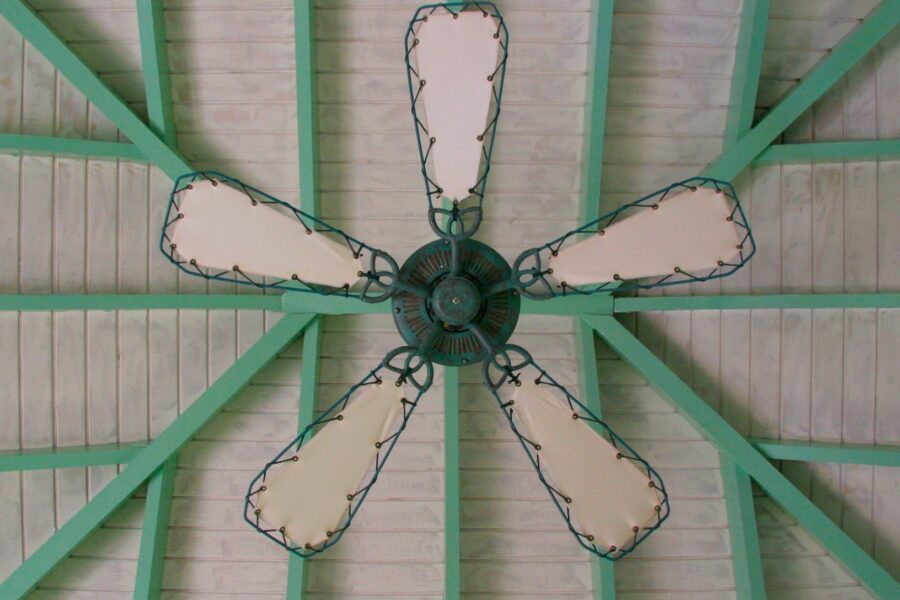
Your ceiling fan wobbles. Maybe it’s a gentle shimmy, maybe it’s a full-on helicopter-in-a-crosswind shake — either way, you’re lying in bed at 2am staring up at it wondering if tonight’s the night it comes down. Here’s the good news: a wobbling ceiling fan almost never falls, and the fix takes about 15 minutes. In most cases it costs exactly zero dollars. Let’s get into it.
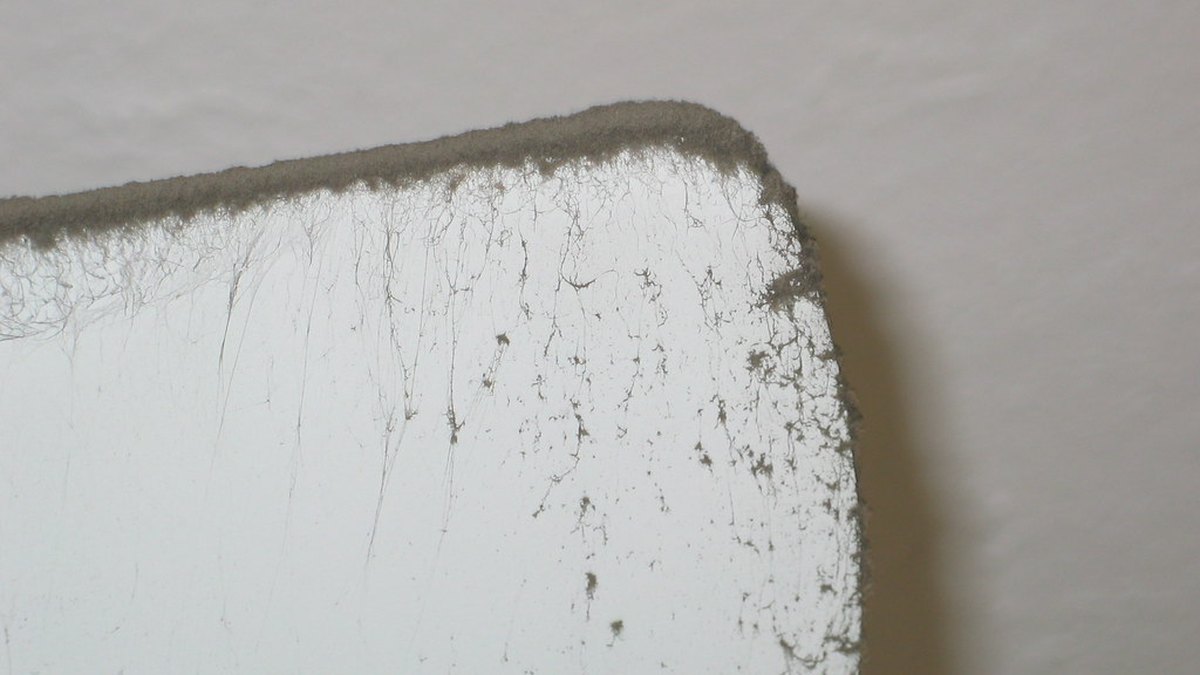
Got called out to a place last week where the homeowner was absolutely convinced the fan was about to drop. She’d been sleeping in the guest room for three days. I climbed up, gave the blade screws a half-turn each, wiped off a serious ring of dust that had packed onto the blade edges — we’re talking close to a quarter inch on each one — and the wobble was gone. Total time: eleven minutes including setting up my ladder. The motor was fine. The mounting bracket was fine. It was loose hardware and dirty blades doing a number on her nerves. Happens more than you’d think.
What Makes a Ceiling Fan Wobble
A ceiling fan is just a spinning object with multiple arms. Any time one side is slightly heavier, dirtier, or positioned differently than the others, the whole thing tries to orbit instead of spin in place. Here are the five culprits, ranked by how often I actually see them:
- Loose blade and arm screws (~60% of cases). Vibration slowly backs out the screws that attach blades to the blade arms and arms to the motor housing. A screw that’s backed out even a millimeter throws off the balance.
- Dust and dirt buildup. Dust piles up unevenly across blades — thicker on top than underneath, heavier on one blade than another — and adds enough asymmetric weight to cause a wobble.
- Blade imbalance. Even from the factory, blades aren’t perfectly matched in weight. Over time that difference shows up, especially at higher speeds.
- Bent blade arm or misaligned blade. A blade arm that got knocked or flexed won’t sit at the same angle as the others. One degree of pitch difference is enough to shake the whole unit.
- Loose mounting bracket or electrical box. The least common, but the most important to catch. If the box or bracket moves when the fan runs, that’s a real problem.
Tools and Parts You’ll Need
You probably have everything already. Here’s the short list:
- Phillips head screwdriver (a #2 covers most fans)
- Flathead screwdriver (for canopy screws on some models)
- Microfiber cloth (or a damp rag — something that grabs dust instead of pushing it around)
- Tape measure or yardstick (to measure blade-tip-to-ceiling distance)
- Small step ladder that puts you at a comfortable working height — not stretching, not ducking
- Ceiling fan balancing kit — if loose screws and cleaning don’t finish the job, this will. The Hunter 99100 balancing kit is the standard; generic kits from Lasko or Westinghouse work just as well. About $5–10 at Home Depot or Lowe’s. Many fans ship with one in the box — check that closet shelf before you head to the store.
Most fixes land at $0 in parts. The balancing kit is the only possible expense, and it’s a small one.
See Also
- Why Your Circuit Breaker Keeps Tripping
- How to Quiet a Noisy Bathroom Exhaust Fan
- Why Your Lights Flicker and When to Worry
Step-by-Step: How to Fix a Wobbling Ceiling Fan
- Kill the power — for real. Turn the fan off at the wall switch and let it come to a full stop. If you’re going to touch the mounting bracket or canopy, go to the breaker panel and flip the circuit off. Don’t skip this step. A fan that gets bumped while spinning can catch a finger. Confirm power is off before climbing.
- Set your ladder so you’re not reaching. Your working height should put your hands comfortably at fan level — arms slightly bent, feet flat on the step. Never stand on the top cap of a ladder.
- Clean every blade top and bottom. Use your microfiber cloth and wipe the full surface of each blade, paying extra attention to the leading edge where dust packs in thick. A bowl of warm water with a drop of dish soap works fine. Let blades dry before restoring power.
- Tighten every blade-to-arm screw. Each blade is held to its blade arm (the metal bracket) by two or three screws. Work around the fan and tighten each one: snug and firm, not gorilla-tight. You’re going into wood or plastic — overtightening strips the hole and makes things worse.
- Tighten every arm-to-motor screw. These are the screws where the blade arm bolts into the motor housing itself. Do them in a cross pattern if there are multiple per arm. Same rule: firm, not forced.
- Check the canopy and downrod. Slide the canopy (the cover at the ceiling) down the downrod. Look for a locking pin or set screw through the downrod — make sure it’s seated. Snug up the canopy screws. Give the downrod a gentle shake with your hand. It should feel solid, not loose in the mounting ball.
- Check the mounting bracket and box. With power still off at the breaker, push gently up on the mounting bracket. It should not move. If the box itself flexes or wobbles, stop — you need a fan-rated electrical box before you go further. A standard light fixture box is not rated to handle a spinning fan’s weight and vibration. Fan-rated boxes are UL-listed and marked on the box itself.
- Measure each blade tip to ceiling. Use your tape measure or yardstick to measure from the ceiling surface straight down to the tip of each blade. Write each measurement down. Any blade that’s more than about 1/8 inch out of line compared to the others has a bent or misaligned arm. Gently press the arm down or up by hand to true it up — they’re typically mild steel and will flex back into position. Don’t force it hard; gradual is better.
- Use the balancing kit if the wobble persists. Restore power and run the fan on medium. One blade at a time, clip the plastic balancing clip (included in the kit) to the trailing edge of a blade, midway along its length. If the wobble gets worse, move to the next blade. When you find the blade where the clip reduces the wobble most, that’s your heavy-side blade. Now slide the clip along that blade from tip to root until the wobble is at its minimum. Peel the backing off one of the adhesive stick-on weights and press it to the top center of the blade at that spot. Remove the clip. Done.
- Test on low, then high. Run the fan at low speed for 30 seconds — smooth? Step it up to high. A little wobble at high that wasn’t there at low usually means you need a second small weight. Stack a second weight next to the first and retest. Most fans settle out with one weight.
What to Check If It Still Wobbles
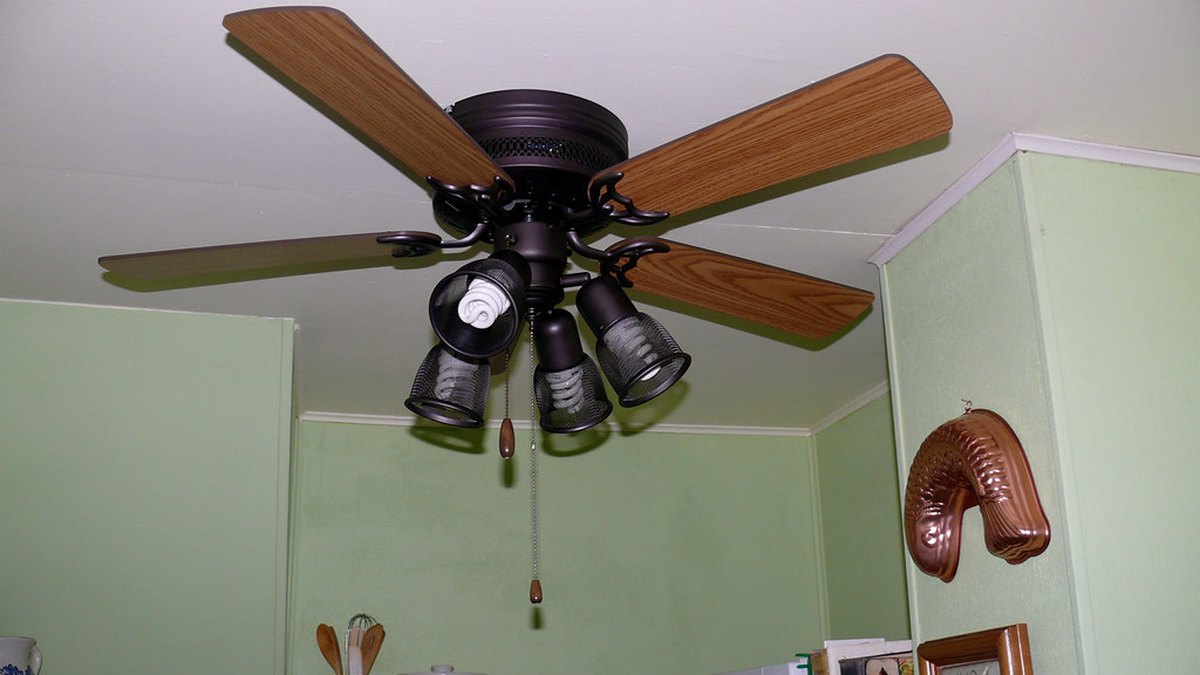
You’ve tightened everything, cleaned the blades, trued the arms, and run through the balancing kit — and it’s still shaking. Here’s where to look next:
- Warped blades from humidity. Wood blades in a bathroom or screened porch can absorb moisture and warp — a curve that no balancing weight will fix. If a blade curves visibly when you sight down it like a rifle barrel, replace the blade set. Most manufacturers sell replacement blade sets for their models.
- Worn flywheel or motor bearing. If you can feel or hear a rough grind or wobble at the motor housing itself — not in the blades — the internal bearing is worn. This is a motor replacement or fan replacement situation.
- Downrod not properly pinned. Some downrod connections use a small cotter pin or roll pin through a hole in the rod. If that pin is missing or sheared, the rod will seat loosely in the mounting ball and wobble no matter what you do to the blades.
- Electrical box not fan-rated. Worth repeating: if the box in your ceiling is a standard octagonal light box, it is not designed for a fan. It may hold the fan’s weight while stationary but fail under the lateral vibration of a spinning motor. This is the one situation that can actually be dangerous. Replace it with a UL-listed fan-rated box before running the fan.
- Fan too heavy for the box rating. Fan-rated boxes have weight ratings — typically 35 lbs or 70 lbs depending on the model. A large fan in a high-ceiling great room may exceed a standard fan box rating. Check the box label and the fan’s weight spec.
When to Call a Pro
Most ceiling fan wobble fixes are genuinely DIY territory. But there are situations where you call a licensed electrician and don’t argue with yourself about it:
- The electrical box needs replacing and you don’t have attic access to install a fan brace kit from above. An electrician runs this in under an hour.
- The fan wobbles after full balancing. If you’ve done everything right and it still shakes, the motor or bearing has failed. Not a DIY repair — replace the fan or have an electrician swap it out.
- You find aluminum wiring. Older homes (pre-1975 in many areas) may have aluminum branch wiring. Working with aluminum wiring safely requires specific connectors and technique. If you see silver-colored wires in your junction box, stop and call an electrician.
- No fan-rated box and no way to add one without opening the ceiling. If you’re not comfortable with that scope of work, it’s electrician territory. Expect $100–300 for a box replacement and fan rehang depending on your area and ceiling height.
Frequently Asked Questions
Is a wobbling ceiling fan dangerous? In the vast majority of cases, no — it’s annoying but not dangerous. The real risk scenario is a mounting box that isn’t fan-rated, because those can pull out of the ceiling under vibration over time. If the blades and hardware are secure and the box is fan-rated, a wobble is a balance or alignment problem, not a safety crisis.
Can a wobbly fan fall? A fan with tight mounting hardware and a proper fan-rated box is extremely unlikely to fall. Ceiling fan falls that make the news almost always trace back to non-rated light fixture boxes being used where a fan-rated box was required, or to fans being installed by someone who skipped the mounting bracket entirely. Do the hardware check first and verify your box is rated.
Why does my fan wobble only on high speed? At low speed the rotational forces are small enough that minor imbalance doesn’t show up much. Crank the speed up and the physics amplify the imbalance — a blade that’s a few grams heavier swings out more, the whole assembly oscillates more. High-speed-only wobble is almost always a balancing issue. Run the clip test on high speed to find the culprit blade.
Do I need a balancing kit? Only if tightening screws and cleaning blades doesn’t solve it — which is most of the time. But yes, keep one on hand. They’re $5–10, they work, and once you’ve done one ceiling fan wobble fix you’ll be the go-to person for everyone on your street.
Sources
- Hunter Fan — “How to Fix a Wobbly Ceiling Fan” (official support guide)
- This Old House — Ceiling Fan Installation and Troubleshooting Guidance
- U.S. Consumer Product Safety Commission — Fan-Rated Electrical Box Requirements
- Home Depot — Ceiling Fan Troubleshooting and Repair Resources
Our Point of View
Here’s the honest truth about ceiling fan wobble: most of the panic is wasted energy. Nine times out of ten it’s loose screws and dusty blades, and fifteen minutes with a screwdriver fixes it for free. The balancing kit handles the other case. What I won’t dismiss is the electrical box — that one actually matters. If your fan is hanging from a light fixture box, stop running it until you swap in a fan-rated box. That’s the only real hazard in this whole conversation. Everything else is just a nuisance. Fix the hardware, balance the blades, verify the box, and sleep easy. — John Fix
Image credits: “Caribbean ceiling fan” by exfordy, “Dirty Ceiling Fan” by taberandrew, and “Kitchen ceiling fan” by Larry Page — via Flickr, licensed under CC BY 2.0.
FixItWhy Score: 8.3/10 — practical repair value, safety coverage, and source quality.
Editorial Review & Transparency
This article was reviewed by our editorial desk for accuracy. John Fix is verified at LinkedIn. Sources are linked inline and listed above. We update articles when new information becomes available. Last reviewed: June 16, 2026.

John Fix
John Fix is FixItWhy’s hands-on repair writer — a plain-spoken handyman who has spent years fixing the everyday stuff homeowners dread, from wobbly ceiling fans to stubborn faucets.
Disclaimer
The views, opinions, and analysis expressed in this article are solely those of the author and FixItWhy Media. They do not constitute professional advice — whether legal, financial, medical, or otherwise. You are free to agree or disagree with our perspective.
This content is provided for informational and editorial purposes only. We make no representations or warranties of any kind, express or implied, about the completeness, accuracy, reliability, or suitability of the information contained herein. Any action you take based on the information in this article is strictly at your own risk.
If the subject matter involves financial decisions, health concerns, legal matters, home safety, or any regulated activity, we strongly recommend consulting with a qualified licensed professional before taking action. FixItWhy Media and its authors accept no liability for any loss, damage, or injury arising from the use of this information.
© FixItWhy Media. All rights reserved.