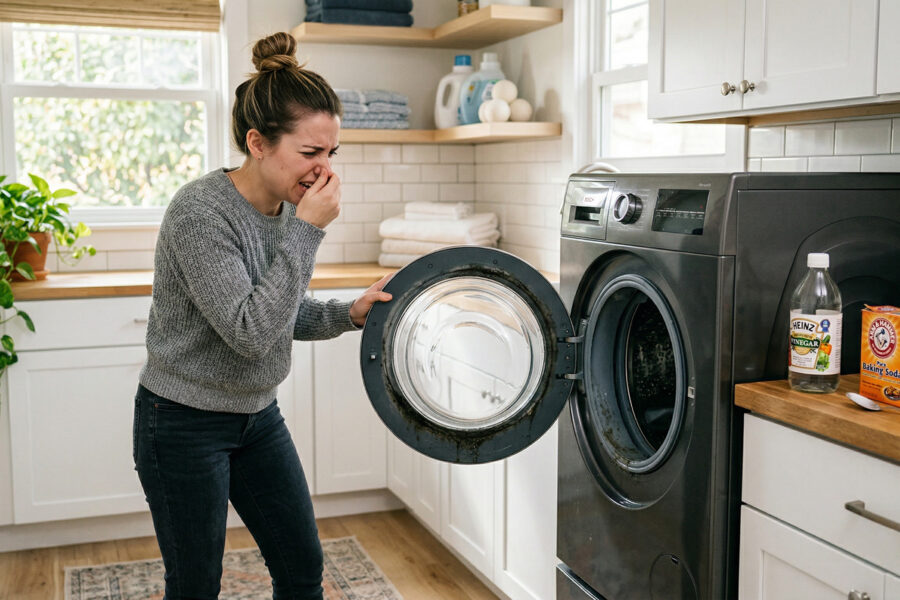
Short answer: A washer smells bad because moisture, detergent residue, and lint feed mold and bacteria inside parts that never fully dry — the rubber door seal, the detergent drawer, and the drain filter. Clean those three spots and run a hot maintenance cycle, and the odor almost always disappears.
By John Fix, DIY handyman. A stinky washing machine is one of the most common complaints we hear, and the good news is that it is almost always a cleaning problem rather than a broken part. Below are the real causes, ranked from most to least common, with a concrete fix for each and a note on when it is worth calling a pro.
1. Mold and biofilm in the door seal and detergent drawer
This is the number one cause, especially on front-loading machines. The rubber gasket around the door traps water, hair, and detergent film in its folds, and that warm, damp pocket grows black mold and a slimy biofilm that smells musty or sour.
The fix: Peel back the rubber gasket and wipe every fold with a cloth dipped in a 50/50 mix of white vinegar and water, or a diluted bleach solution (never mix the two). Pull out the detergent drawer completely — most slide out after you press a release tab — and scrub it and its cavity with an old toothbrush. Dry everything before closing the door.
Call a pro if: the mold returns within days no matter how often you clean, or the gasket is torn. A cracked seal holds water and may need replacing.
2. Too much detergent or fabric softener
More soap does not mean cleaner clothes. Excess detergent and liquid fabric softener do not fully rinse away; they leave a sticky residue inside the drum and hoses that becomes food for odor-causing bacteria. High-efficiency (HE) machines are especially sensitive because they use very little water.
The fix: Cut your detergent to the amount marked for your load size — for HE machines that is often just a tablespoon or two. Switch from liquid fabric softener to wool dryer balls or a splash of white vinegar in the rinse, both of which leave no residue. Then run one empty hot cycle to flush out the old buildup.
3. Standing water in the drain filter or sump
Most front-loaders and many top-loaders have a small drain pump filter (usually behind a panel at the lower front) that catches coins, lint, and hair. When it clogs, dirty water sits and stagnates, producing a strong rotten smell.
The fix: Put a towel and a shallow pan down first — water will spill out. Unscrew the filter cap, pull out the debris, rinse the filter under the tap, and screw it back in. Doing this every one to two months prevents most odors and also helps with drainage problems. If your machine is also failing to empty, see our guide on why your washing machine won’t drain.
Call a pro if: the filter is clean but water still pools in the drum, which can point to a failing drain pump.
4. A clogged or poorly installed drain hose (sewer smell)
If the odor smells like a sewer or rotten eggs rather than mildew, the problem may be the drain plumbing, not the washer itself. A drain hose pushed too far down the standpipe, or a missing P-trap, lets sewer gas travel back up into the machine.
The fix: Check that the drain hose only goes a few inches into the standpipe and is not sealed airtight against it — it needs an air gap. Make sure the standpipe has a proper P-trap underneath. Flushing the standpipe with a mix of baking soda and hot water can clear minor clogs.
Call a pro if: you suspect a missing trap or a blockage deep in the household drain line. That is a plumbing job.
5. Washing everything in cold water
Cold washes save energy, but they never get hot enough to kill the bacteria and dissolve the greasy residue that build up over months. A machine that only ever sees cold water will eventually develop a low, stale odor.
The fix: Run a hot or “sanitize” cycle at least once a month with the drum empty. Add two cups of white vinegar, or a commercial washer-cleaning tablet, to break down the film. Heat plus an acid or cleaner is what actually resets a smelly drum.
6. Leaving wet laundry in, or sealing the door shut
Damp clothes left in the drum for hours sour quickly, and a door closed tight right after a cycle traps humidity so mildew thrives. This is the easiest cause to fix — and to prevent.
The fix: Move laundry to the dryer promptly. If wet clothes also seem to take forever afterward, that is a separate issue covered in why your dryer takes forever to dry clothes. Between washes, leave the door and the detergent drawer open so the inside can air out and dry completely.
How to deep-clean a smelly washer in one session
If the smell is already strong, do all of these in order: wipe the door gasket and remove and scrub the detergent drawer; clean out the drain filter; run a hot empty cycle with two cups of white vinegar; then run a second hot cycle with a half cup of baking soda sprinkled in the drum. Finish by wiping the drum dry and leaving the door open overnight. This full reset clears the vast majority of odors. If your machine also won’t spin properly, address that too, since leftover water makes smells worse.
Frequently asked questions
Can I use bleach and vinegar together to clean my washer?
No. Never mix bleach and vinegar — the combination releases toxic chlorine gas. Use one or the other in separate cycles, and rinse in between.
How often should I clean my washing machine?
Wipe the gasket weekly, run a hot cleaning cycle monthly, and clean the drain filter every one to two months. Front-loaders need more attention than top-loaders.
Why does my washer smell worse in summer?
Heat and humidity speed up mold and bacteria growth, so any existing residue smells stronger in warm months. Keeping the door open between washes makes the biggest difference.
Is a smelly washer dangerous?
The smell itself is mostly unpleasant rather than hazardous, but heavy black mold can aggravate allergies and asthma. If you see widespread mold you cannot remove, have the machine serviced.