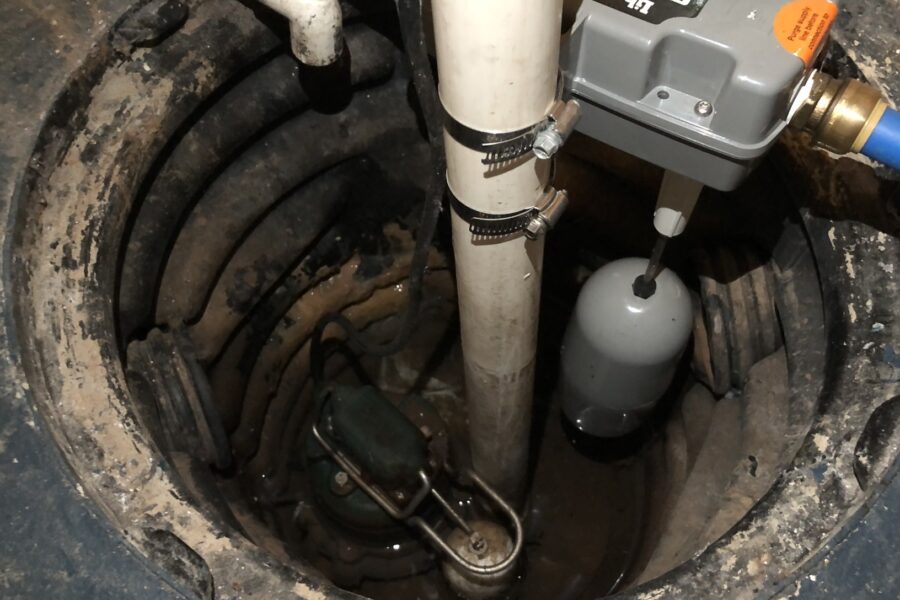
Water is creeping across your basement floor, and your sump pump is either sitting completely silent or making a low, grinding hum. Maybe it was working fine last week. Now it’s not, and the rain outside isn’t stopping. The good news: a sump pump not working is one of those problems that looks scarier than it is. In most cases, you’re dealing with a tripped outlet, a stuck float, or a clogged intake — all fixable in under 30 minutes with basic tools and no plumbing license required.
Before you assume the motor is toast, take a breath. Run through this guide start to finish. Nine times out of ten, the fix is simple.
Got a call last Tuesday after a bad thunderstorm rolled through. Homeowner — good guy, had no idea what he was looking at — swore the motor was completely dead. Said he could hear it humming but nothing was moving. I drove over, lifted the lid off the pit, and found the float switch pinned tight against the pit wall by a zip tie that had slipped. The pump couldn’t cycle. Took 90 seconds to fix. He’d already started pricing new pumps online. That’s how it usually goes — people jump to “it’s broken” when the real problem is something cheap and mechanical. John Fix has seen this exact scenario more times than he can count.
What “Not Working” Actually Means
Sump pump failures aren’t all the same, and the fix depends entirely on which failure mode you’re dealing with. Here’s how to tell them apart:
- Won’t turn on at all: No sound, no movement, nothing. This points to a power issue (tripped GFCI outlet, blown breaker, unplugged cord) or a float switch stuck in the down position so the pump never gets the signal to start.
- Humming but not pumping: The motor is trying but can’t move water. Classic signs of a jammed impeller, an airlock in the discharge line, or a check valve that’s failed or installed backwards. This is the “sump pump humming but not pumping” scenario.
- Running but not pumping water: The pump cycles on and off normally, but water levels in the pit aren’t dropping. Could be an airlock, a clogged intake screen, a failed check valve letting water fall back in, or a frozen or blocked discharge line outside the house.
Knowing which category you’re in before you touch anything saves a lot of time.
Tools and Parts You’ll Need
- Flashlight or headlamp
- Rubber gloves (waterproof, elbow-length preferred)
- Bucket of water (for testing the pump manually)
- Flathead and Phillips screwdriver
- Shop vac (to clear debris from the pit)
- Zip ties (for repositioning the float switch)
- Spare check valve (~$10–15) — make sure it matches your discharge pipe diameter
- Replacement float switch (~$15–25) if the existing one is damaged
- Multimeter (optional, for testing the float switch and motor continuity)
- 3/16″ drill bit (for drilling a weep hole if your discharge line lacks one)
- Replacement pump if needed: a 1/3 HP pedestal or submersible is standard for most residential pits. The Zoeller M53 and the Wayne CDU980E are both reliable workhorses in the $120–180 range.
You can pick up most of this at Home Depot sump pumps or Lowe’s sump pumps. If you need it fast, both usually carry the Zoeller M53 in stock.
See also: why your water heater is leaking, why your dishwasher won’t drain, and why your refrigerator is leaking water.
How to Fix a Sump Pump That Won’t Turn On (Step by Step)
- Kill the power first — no exceptions. Before your hands go anywhere near that pit, unplug the pump from the outlet or kill the circuit at the breaker. If there is standing water in the basement that’s touching any outlets, baseboards, or electrical panels — stop immediately. Call a licensed electrician. Do not proceed. Water and live current are a lethal combination.
- Check the GFCI outlet. Sump pumps are typically plugged into a GFCI-protected outlet in the utility area. These outlets trip during power surges — exactly the kind that come with the storms that flood basements. Look for the “TEST” and “RESET” buttons on the outlet face. If the RESET button pops out when you press it and then stays in, a GFCI tripped outlet was your whole problem. Plug the pump back in and test.
- Check the breaker panel. If the outlet looks fine, go to your breaker box. Find the circuit labeled for the sump pump (often “sump,” “utility,” or “basement”). If it’s tripped, it’ll be in a middle position between ON and OFF. Flip it fully to OFF, then back to ON. A breaker that trips again immediately signals a wiring or motor problem — don’t force it.
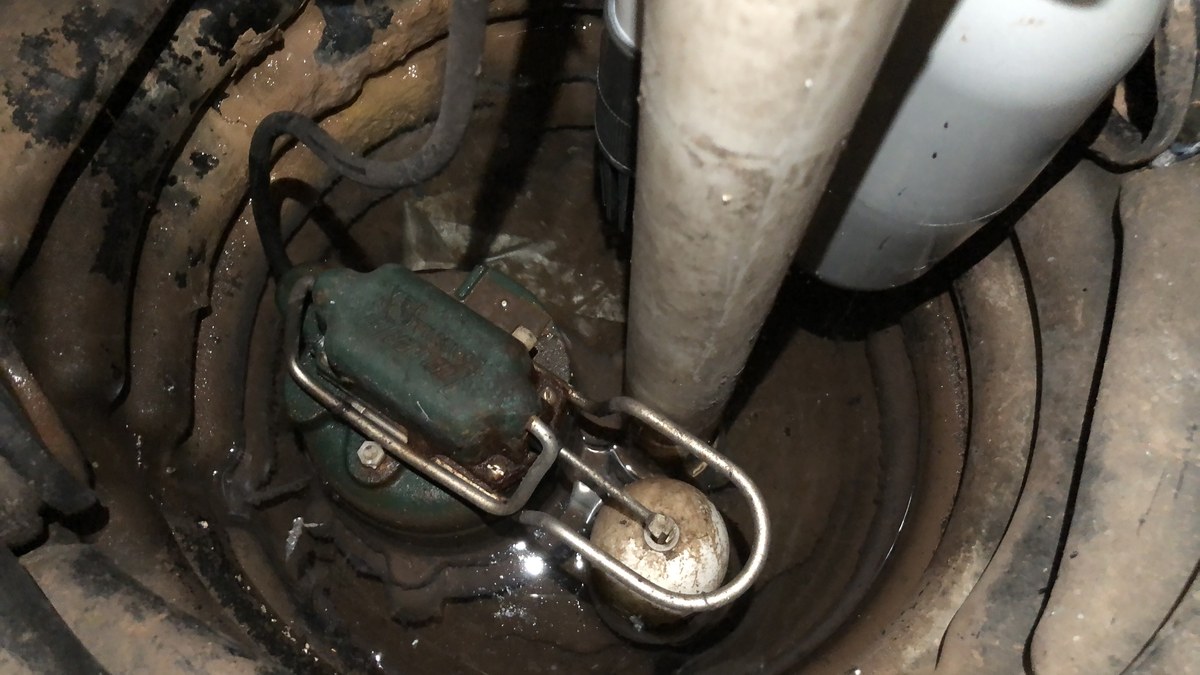
- Inspect and free the float switch. This is the single most common cause of a sump pump that won’t turn on. The float is a small plastic ball or cylinder on an arm or tether that rises with the water level and triggers the pump. It can get wedged against the pit wall, tangled in the power cord, or stuck in the down position. Reach in (power off, gloves on), find the float, and make sure it can move freely up and down. Reposition it away from the wall and secure the cord with a zip tie if needed.
- Test the float switch by hand. With power restored (carefully — don’t touch the water), lift the float by hand to simulate rising water. You should hear the pump kick on within a second or two. If it does, the switch is working and the float position was the problem. If the pump still doesn’t start with the float manually raised, the switch may be faulty and needs replacement.
- Check the check valve orientation. The check valve on your discharge line should have an arrow molded into the body. That arrow must point away from the pump and up the discharge pipe. A backwards or failed check valve can allow water to drain back into the pit, overwhelming the pump or creating airlocks. If the valve is cracked, warped, or backwards, replace it — it’s a $10–15 part and a 20-minute swap.
- Clear the intake screen. At the very bottom of most submersible pumps is a small intake screen or grate. Silt, gravel, and debris collect here and can block water from entering. With the pump unplugged and removed from the pit (if possible), use gloves and a brush or shop vac to clear the intake. Rinse it clean before reinstalling.
- Check for an airlock and drill a weep hole if needed. If your discharge pipe doesn’t have a small weep hole (a 3/16″ hole drilled into the pipe about 6 inches above the pump, inside the pit), the line can develop an airlock that prevents priming. Drill one if it’s missing. Then do a final test: pour a full bucket of water into the pit and watch. The pump should kick on when the water reaches the float trigger level, run until it clears the pit, then shut off cleanly.

Why Your Sump Pump Is Running but Not Pumping Water
If the pump is running normally — you can hear it cycling, the motor sounds healthy — but water in the pit isn’t dropping, you’re dealing with one of four things:
Airlock in the discharge line. Air trapped in the discharge pipe prevents water from moving even when the impeller is spinning. A properly positioned 3/16″ weep hole (see Step 8 above) usually prevents this. If you don’t have one, drill it. You can also try rocking the pump slightly in the pit to break the air bubble loose.
Failed or backwards check valve. A check valve’s job is to let water out and prevent it from flowing back into the pit when the pump shuts off. If the valve is stuck closed, water can’t escape. If it’s stuck open or installed backwards, pumped water drains back down the moment the pump cycles off — making it look like the pump is running but not pumping water. Pull the valve, inspect it, and replace it if there’s any doubt.
Clogged intake screen. Already covered in the steps above, but worth repeating here: a blocked intake means the pump is spinning against air or very restricted flow. The motor works, but nothing moves. Clean the screen.
Frozen or blocked discharge line. In cold climates, the exterior discharge line can freeze solid in winter. In summer, it can get blocked by mud, leaves, or a critter nest. Walk the discharge line from the house to where it exits and make sure water is actually coming out when the pump runs. A frozen line needs to be thawed — a heat gun or warm water works. For the long term, make sure the discharge exits downhill and away from the foundation at a slight grade.
Jammed impeller (sump pump humming but not pumping). If the motor hums but the pump doesn’t move water, the impeller — the spinning component that actually moves water — may be jammed with gravel or debris. Unplug the pump, pull it from the pit, and turn the impeller by hand through the intake opening. If it won’t spin freely, clear the debris. If it still won’t move, the impeller may be cracked or the motor shaft may be seized.
What to Check If It Still Won’t Work
Dead capacitor or motor thermal overload. A pump that hums briefly then goes silent — and won’t restart — has likely tripped its internal thermal overload protector (a safety feature that shuts the motor down when it overheats). Let the pump rest for 20–30 minutes, then try again. If it trips repeatedly, the motor is struggling and likely near the end of its life.
Worn-out pump. Residential sump pumps typically last 7–10 years under normal conditions. If yours is past that window, no amount of troubleshooting will make up for worn brushes, a corroded impeller, or bearing failure. Check the date stamp on the motor housing or your purchase records.
Undersized pump. A 1/3 HP pump is standard for most basements, but if you have a high water table, a large pit, or heavy storm drainage routing into the basin, you may simply need more capacity. Repeated short cycling — the pump running every few minutes even in dry weather — is a sign the pump is undersized or the pit is too small.
No battery backup during outages. Power goes out during storms. That’s exactly when you need the pump most. A battery backup sump pump system (separate unit, sits above the primary, kicks in when power fails) is cheap insurance. They run $150–300 and install in an afternoon.
Why won’t my sump pump shut off? A pump that won’t shut off usually has a float switch stuck in the raised (on) position. The float may be waterlogged, tangled, or jammed against the wall in the up position rather than the down position. It can also mean the pit is filling faster than the pump can discharge — check for open drainage lines, a cracked pit liner, or a ground water table that’s overwhelming the system.
When to Call a Pro
Most sump pump fixes are genuinely DIY-friendly, but there are situations where you should put the tools down and make a call:
- Water is touching electrical outlets, panels, or wiring anywhere in the basement
- The pump is hardwired (no plug — goes directly into a junction box); electrical work requires a licensed electrician
- You’ve replaced the pump more than twice in five years — that’s a drainage system problem, not a pump problem
- The pit is pumping sewage or has a foul odor — that’s a sewage ejector pump, which is a different system entirely and requires a licensed plumber
- You’re seeing cracks in the foundation, water seeping through walls, or pooling that doesn’t relate to the storm drain — that’s a waterproofing and foundation issue, not a pump issue
- You’re not comfortable with the full replacement process, especially in a pit with significant standing water
Frequently Asked Questions
Why is my sump pump not working?
The most common reasons are a tripped GFCI outlet, a stuck float switch, a clogged intake screen, or a failed check valve. Start with the power supply — check the outlet and the breaker first — then work your way through the float and the mechanical components. Most causes are fixable without any special tools in under 30 minutes.
How to fix a sump pump that won’t turn on
First, kill the power before touching anything in the pit. Then check the GFCI outlet (press the reset button), check the breaker, and inspect the float switch for any obstruction. Lift the float by hand with power on — if the pump starts, the float position was the problem. If it still doesn’t start, test the switch with a multimeter or replace it outright; a new float switch runs $15–25.
Why is my sump pump running but not pumping water
The most likely culprits are a failed check valve letting water drain back into the pit, a blocked intake screen, an airlock in the discharge line, or a frozen or obstructed exterior discharge pipe. Check the check valve arrow direction first, then clear the intake screen, then trace the discharge line outside to confirm water is actually exiting.
Why is my sump pump humming but not pumping
Humming without pumping usually means the motor is getting power but the impeller can’t spin — either because it’s jammed with debris, there’s a severe airlock, or the motor shaft is seized. Unplug the pump, pull it from the pit, and try turning the impeller by hand through the intake. If it won’t move freely after clearing any debris, the pump likely needs replacement.
How do I reset my sump pump
Most residential sump pumps don’t have a dedicated reset button. To reset, unplug the pump from the outlet, wait 30 seconds, and plug it back in. If the pump tripped its internal thermal overload (from overheating), let it cool for 20–30 minutes before restarting. Also check and reset the GFCI outlet and the circuit breaker. If the pump trips repeatedly after resetting, the motor is failing and the pump should be replaced.
Why won’t my sump pump shut off
A pump that runs continuously usually has a float switch stuck in the raised position, signaling the pump to stay on even when water levels are low. Check that the float moves freely and isn’t wedged upward against the pit wall or tangled in the cord. A continuously running pump can also mean the pit is filling faster than the pump can handle — in that case, you may need a higher-capacity pump or a second unit.
Sources
- Zoeller Pump Company — Residential Sump Pumps
- This Old House — How to Maintain a Sump Pump
- FEMA — Home Floodproofing Techniques
- Penn State Extension — Basement Waterproofing and Drainage
Our Take
A sump pump is cheap insurance against a flooded basement that can cost $10,000–$50,000 to remediate. The pump itself runs $120–180. Test it quarterly by pouring a bucket of water into the pit and watching it cycle. Keep a spare float switch on the shelf and, if you’re in a storm-prone area, seriously consider a battery backup unit — it’ll run the pump for hours through a power outage, which is exactly when you need it most. Don’t wait for a rainstorm to find out yours isn’t working.